Inside this book
Angel of the North, Blackpool Tower, Iron Bridge, Buckingham Palace, Caernarfon Castle, Carrick-a-Rede Rope Bridge, Clifton Suspension Bridge, Edinburgh Castle, Eilean Donan Castle, Forth Bridge, Giant’s Causeway, Hadrian’s Wall, Houses of Parliament, The Kelpies, Loch Ness, Minack Theatre, Pontcysyllte Aqueduct, Roman Baths, Snowdon (Yr Wyddfa), Stonehenge, Tower of London, Wales Millennium Centre, Whitby Abbey, Windsor Castle.
More about this book
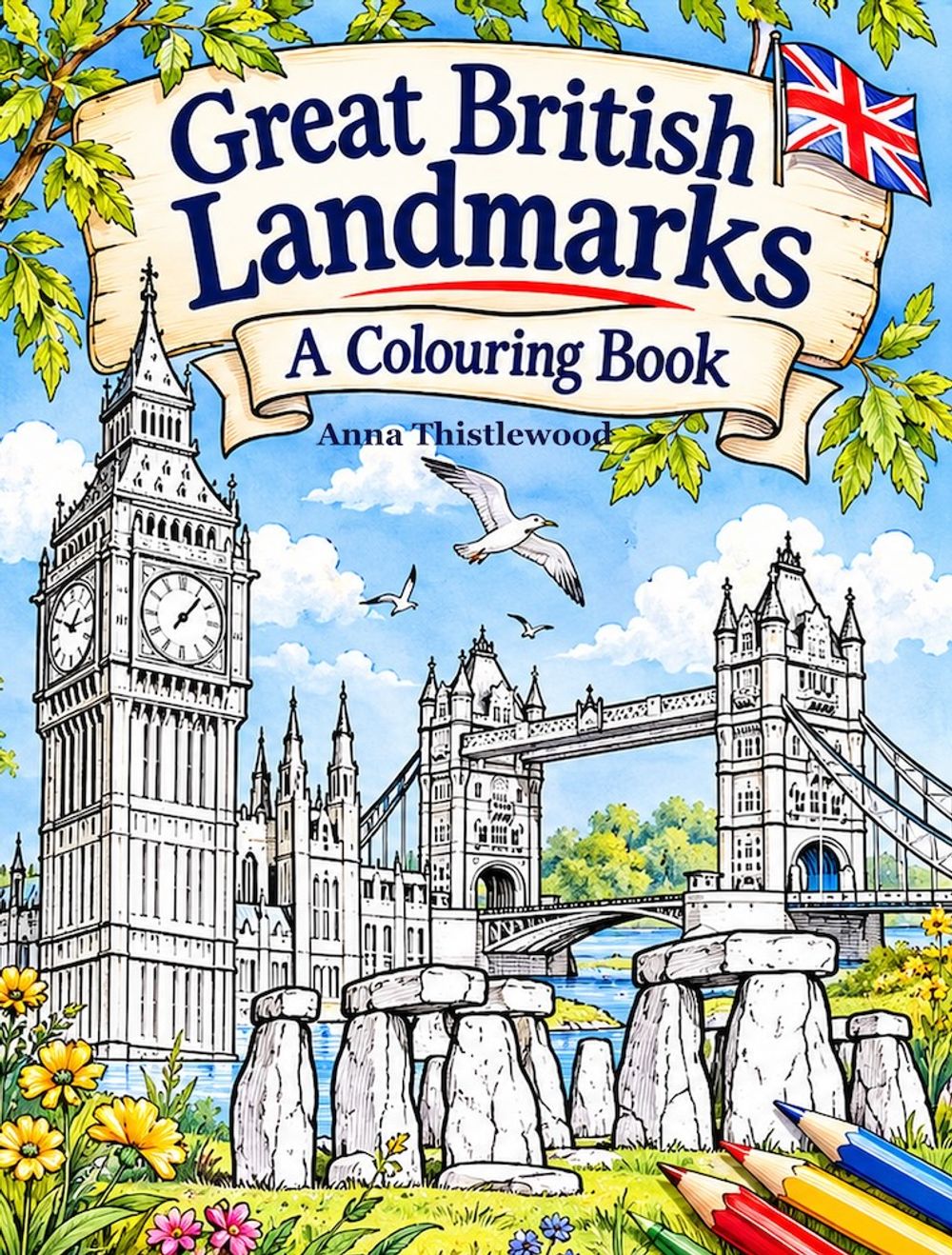
Great British Landmarks: Colour, Discover and Learn
Explore Britain’s famous places with Great British Landmarks, a colouring and activity book that brings together pictures, facts and opportunities to learn. Children can discover the stories behind recognisable buildings and places, then bring each scene to life in their own colours.
Designed for curious young minds, the book offers a creative way to begin conversations about British history, geography and culture. Enjoy it together at home, use a page to introduce a classroom topic, or take inspiration from somewhere your family has visited.
More than a colouring book
The illustrated pages combine colouring with facts that give children something to notice, discuss and remember. Pictures offer a starting point for questions: Who lives here? What happens in this building? Where would we find it on a map?
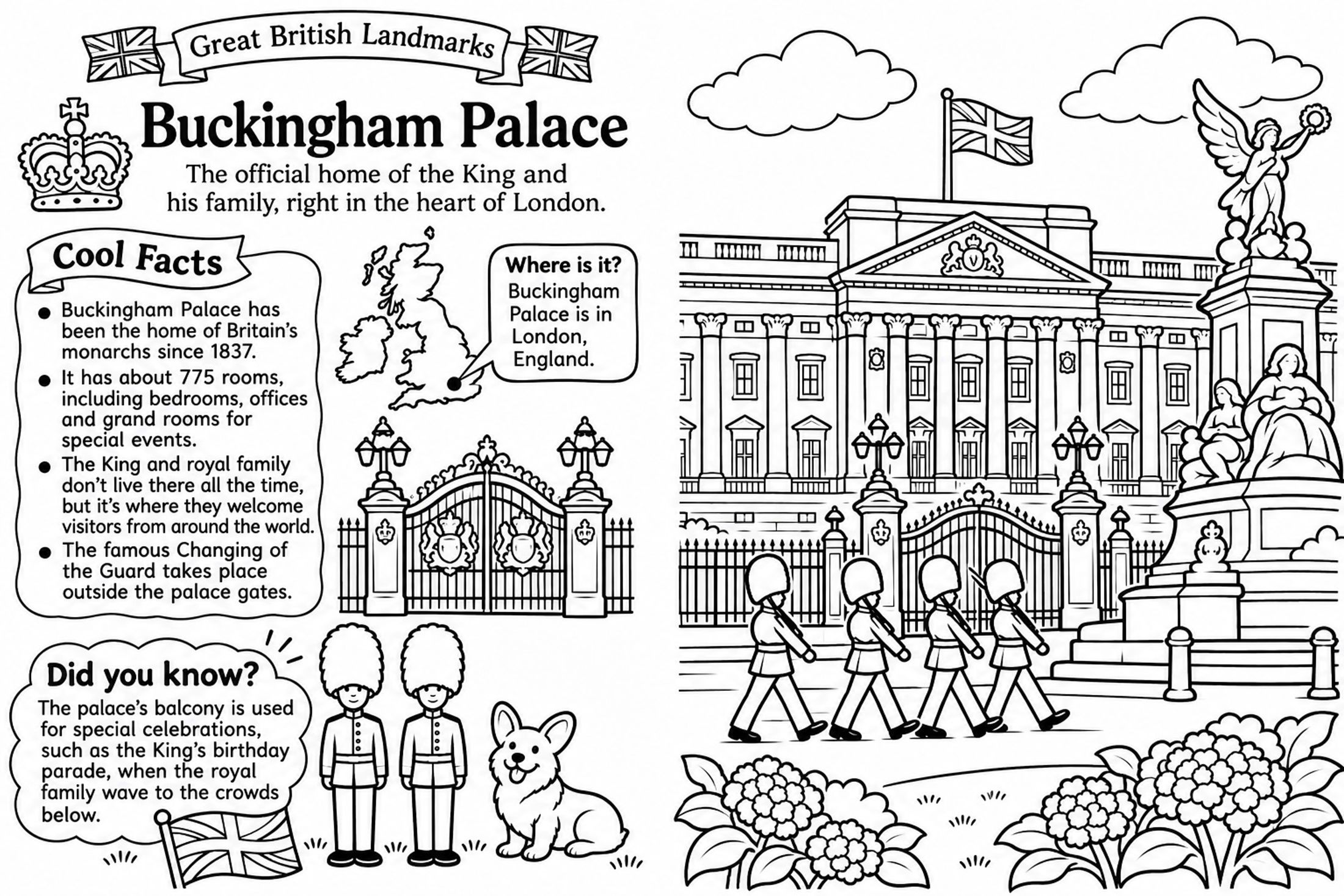
The Buckingham Palace spread, for example, pairs a detailed colouring scene with facts about the palace, a location map and illustrations of guards, gates and royal symbols. Children can explore the information with an adult before choosing colours for the scene.
This combination of reading, looking and creating makes the book an inviting introduction to learning about British landmarks.
Ideas for learning in Years 1–4
Parents, carers and teachers can adapt the pages to suit children across Years 1–4 of primary school.
Younger children might name things they recognise, talk about shapes and practise colouring smaller details. Older children could read the facts, find unfamiliar words, locate a landmark on a map or write a few sentences about what they have discovered.
Try asking children to:
- Describe the landmark and pick out three interesting details.
- Find its location on a map of Britain.
- Choose a fact to share with someone else.
- Imagine visiting and explain what they would like to see.
- Create a short postcard inspired by the place.
These are suggestions for extending the learning alongside the book, giving children different ways to respond to the same page.
Practice fine motor skills through creativity
Colouring gives children opportunities to practise pencil control, hand–eye coordination and careful movements. Larger areas invite free colour choices, while smaller details encourage a slower, more focused approach.
There is room for individual expression, too. Children can choose realistic colours, invent their own combinations or discuss how colours change the mood of a scene.
Encourage curiosity about Britain
A familiar picture can open the door to a new interest. Whether a child recognises Buckingham Palace or encounters it for the first time, learning about a landmark can lead to questions about the people, traditions and events connected with it.
Other landmarks to learn about and colour include Whitby Abbey, the Roman Baths, Blackpool Tower, Caernarfon Castle and Loch Ness. There are 24 in total across England, Wales, Scotland and Northern Ireland.
Great British Landmarks invites children to look closely, ask questions and enjoy discovering more about Britain: one colouring page at a time.
Buy Great British Landmarks on Amazon
Buy on Amazon